
PC Performance Test and CPU/GPU Combo Rating

Every gaming build lives or dies on how well two parts work together, so guessing whether your processor and graphics card are a good match leaves real frames on the table. This PC performance test rates the pairing for you. Pick your CPU, your GPU and a target resolution, then get an overall rating, a gaming and balance score, estimated FPS with 60 and 120 FPS coverage, the bottleneck direction, and the RAM and power the build needs. It turns cpu gpu pairing from a guess into a clear read you can act on before you build.

Pick your processor and graphics card and a target resolution, then rate the build and see how its CPU/GPU balance changes across resolutions.

Why this tool rates the pairing, not one part

It is easy to spend big on a graphics card and forget the processor that feeds it, or the other way round. When the two are mismatched, the quicker part is left running below its potential, and the extra you paid for it never reaches the screen. That is why this test scores how you match cpu with gpu at your resolution instead of judging either one alone. If you want the deeper picture of cpu and gpu compatibility, start here, then use the rating below to see whether your build leans on the processor, the graphics card, or sits nicely in balance. A quick read here points your budget at the part that will actually raise your frames.
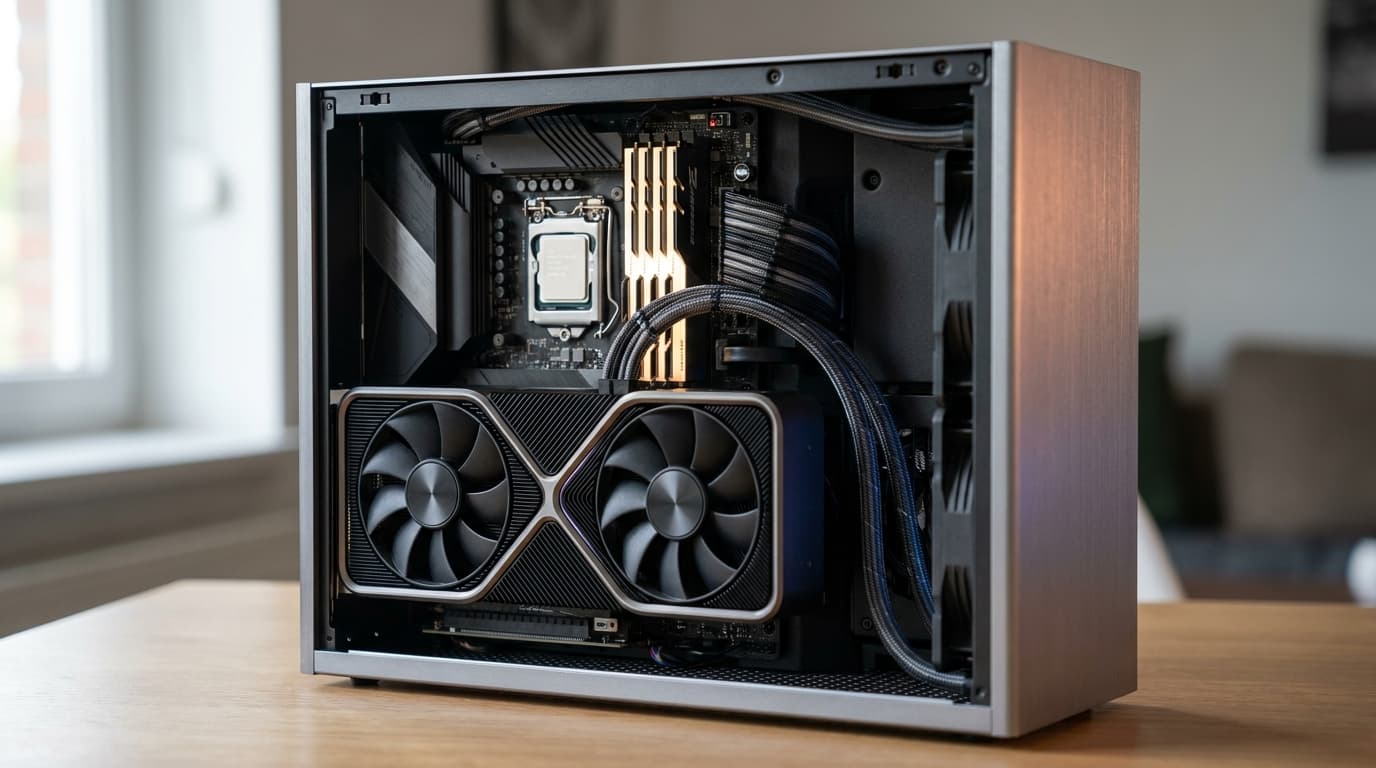
Gaming PC showing CPU, RAM and GPU pairing in a case
Gamer at monitor checking game FPS and performance overlay

What your scores actually tell you

Once you press Calculate, the tool turns your build into a few clear numbers. The overall rating sums up the whole system, while the gaming and balance scores show how hard each part works and how evenly they share the load. Below that, the resolution table lists average FPS with the share of games that reach 60 and 120 FPS, plus the bottleneck direction at 1080p, 1440p and 4K. Read together, they tell you whether your cpu gpu combo is ready for the games you play, and where your next upgrade counts most. That turns the result from a simple grade into a plan you can act on with confidence.

What a Balanced Gaming Build Needs

A strong build is not about one headline part, it is about four things working together so no part quietly drags the others down. Before you match cpu with gpu, it helps to know what actually moves your frame rate at your resolution, from the processor and graphics card down to memory and power. The tool scores the pairing for you, but these are the pieces behind that score. Get them roughly in balance and a mid range build can feel faster than an expensive one with a clear weak link. Below are the four areas to check, each with a place to dig deeper. Read them together with your rating, and you will know exactly where your money does the most good and which compatible gpu or processor upgrade is worth it.

Best CPU for Gaming and 4K

The right processor keeps your graphics card fed without becoming the limit, and at 4K that bar is lower than most people expect, because the graphics card takes on more of the work.

best cpu for 4k gaming ↓

Which Graphics Card to Pair

Your graphics card sets most of your frame rate at higher resolutions, so pick one that matches your target monitor before worrying about anything else.

gpus ranking ↓

How Much RAM You Need

Run short on memory and your PC stumbles as it juggles open apps, but give it enough and games stay responsive with room to spare.

how much ram should i have ↓

How Much Power You Need

Guess the wattage low and a demanding session can trip the whole system, so it pays to plan for the peak with a little to spare.

pc power calculator ↓

Frequently Asked Questions

What does the PC performance score measure?

It combines a gaming score, a balance score and the standing of your CPU and graphics card into one overall rating. Alongside that you get average FPS, the share of games reaching 60 and 120 FPS, the bottleneck direction and a recommended PSU and RAM for your chosen resolution.

Can a weak CPU bottleneck a strong graphics card?

Yes. At lower resolutions the processor has to keep pace with high frame rates, so a slower CPU can hold back a fast graphics card. To see how that plays out title by title and whether a game will it bottleneck your build, check the game results at your resolution.

Why does my rating change between 1080p and 4K?

Because the tool scores your exact pair at the resolution you pick, and the same build can land differently at each one. The practical takeaway is simple: judge your build at the resolution you actually play, since a rating that looks tight at 1080p can ease off at 1440p or 4K with the very same parts. The resolution table lists all of them side by side so you can compare at a glance.

Is this the same as a real benchmark?

No. The rating is a modeled estimate built from how your CPU and graphics card score against each other and how demanding each game is, not a live capture from your own machine. Use it to compare builds and plan ahead, then confirm the exact figure with a quick in game test once the parts are in hand.

Which part should I improve first?

Lead with the balance score and the standing of each part in your result. If the rating marks the processor as the weaker link, that is where an upgrade lifts your score the most; if the graphics card sits lower, start there instead. Then re run the tool with the new part in place to confirm the pairing scores better before you commit.

Do I have to pick a game and resolution?

A processor, a graphics card and a resolution are needed for the rating. Adding the game you care about is optional, but it sharpens the FPS estimate for that title instead of showing only an average across a popular sample.