RTX 4070 to RX 9070 XT Upgrade: Why I Finally Switched to AMD From NVIDIA
Upgrading your graphics card in 2026 is not as simple as it used to be. GPU prices swing all over the place, new launches arrive expensive, and it often feels like there are no genuinely good deals to be found. After weeks of researching an RTX 4070 to RX 9070 XT upgrade, I finally took the plunge and moved from NVIDIA to an AMD Radeon RX 9070 XT.
At first I was set on staying with NVIDIA. My plan was an RTX 5070 Ti, or maybe an RTX 4080 if a good used deal came along. But once I lined up the price, performance, warranty, and real-world gaming results side by side, the RX 9070 XT turned out to be the far better fit for me. Here is my full experience, and why I now think AMD is a serious contender in the high-end GPU space.
Why I Wanted to Upgrade From the RTX 4070
The RTX 4070 is still a very capable card. It handles modern games well at 1440p, runs efficiently, and comes with NVIDIA extras like DLSS and strong ray tracing. But as newer titles kept getting heavier, I started running into its limits.
The main reasons I wanted more were:
- More VRAM for future games
- Higher graphics settings without compromise
- Headroom for demanding AAA releases
- A smoother high refresh rate experience
The RTX 4070 has 12GB of VRAM, which is enough for most games today. Even so, I wanted something that would last a few more years without me constantly dialing settings back. Before committing to any card, it helped to estimate the frame rates I could realistically expect, and an fps predictor for games gives a quick sense of that for your own setup. This was not about chasing a small bump. I wanted an upgrade that genuinely felt worth the money.
Finding an RTX 5070 Ti Was Harder Than I Expected
On paper, the RTX 5070 Ti looked like the perfect step up. It offered a clear jump over the RTX 4070, a newer architecture, improved ray tracing, better DLSS, and all the usual NVIDIA ecosystem benefits. The problem was the price. In my area, even basic RTX 5070 Ti models on Amazon were selling for $1,100 or more, well beyond what I wanted to spend.
So I turned to the used market, and that was its own headache. Prices stayed high for cards listed as "brand new" and unopened, and most were only slightly cheaper than a new retail card. Worse, many sellers refused to let me test anything before paying. Every time I asked to run a quick benchmark or check temperatures, the replies sounded the same:
- "It was barely used."
- "The PC already sold."
- "It was just sitting there."
- "No time to test it."
Buying an expensive GPU with no testing is always a gamble. A card can look flawless on the outside and still hide overheating problems, coil whine, a mining past, or other defects. That is when I started asking myself whether the used route was worth the risk at all. If sky-high prices are pushing an upgrade out of reach entirely, cloud gaming has become a real alternative too, and GeForce NOW recently added RTX 5080 servers that let you play demanding games at high settings without buying new hardware.
Used RTX 4080 Prices Were Still Too High
Since the RTX 5070 Ti was proving so hard to pin down, I looked at the RTX 4080 instead. It is a genuinely powerful card with excellent gaming performance, solid ray tracing, and the full NVIDIA feature set. But the prices surprised me again. Many used RTX 4080 and 4080 Super cards were going for $900 to $1,000. Spending that much on a used, previous-generation card with no full warranty just did not add up. So I shifted my attention to new GPUs, and that is when AMD entered the picture seriously.
Taking a Closer Look at the RX 9070 XT
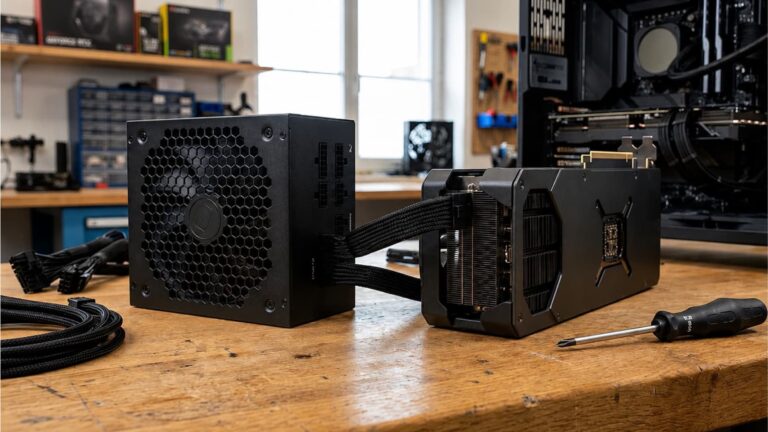
During the search I spotted the Sapphire Nitro+ RX 9070 XT for around $880, and it caught my eye immediately. The Nitro+ is one of the higher-end versions of the card, and it promised premium cooling, better build quality, a factory tuned clock, lower temperatures, and quiet operation. A card like this also pulls real power, so it is smart to confirm your power supply can handle it. A quick check with a psu calculator tells you the wattage you actually need before you buy.
I will admit I was hesitant about switching to AMD. NVIDIA has been the default name in gaming GPUs for years thanks to DLSS, stronger ray tracing, NVENC encoding, CUDA support, and its growing AI features. I assumed AMD still carried some big drawbacks. But the more benchmarks I watched and the more owner experiences I read, the more that assumption fell apart. AMD had come a long way.
How Far AMD Has Actually Come
One of my biggest worries was software. AMD GPUs used to have a reputation for shaky drivers, inconsistent features, and weaker streaming quality. The current generation is a completely different story. The RX 9070 XT delivers strong results across the board:
- Traditional rasterized gaming
- Smooth 1440p performance
- Capable 4K gaming
- High refresh rate play
- Content creation workloads
FSR has also improved a great deal. NVIDIA still holds an edge in a few areas like AI-based image reconstruction and heavy ray tracing, but the gap is much smaller than it used to be. For gamers who care most about raw performance per dollar, AMD has become a genuinely attractive option.
RX 9070 XT Gaming Benchmarks and Real-World Feel
Gaming was my main reason for buying, and this is where the RX 9070 XT really shines. Compared to my RTX 4070, the jump feels massive. What I noticed right away:
- Higher FPS. Games that used to need compromises now run much smoother.
- A better 1440p experience. On a high refresh 1440p monitor, it drives demanding titles at consistently smooth frame rates.
- More future-proof VRAM. Modern games keep pushing higher-quality textures, ray tracing, and huge open worlds, and the extra memory headroom keeps the card relevant longer.
RTX 4070 vs RX 9070 XT and the Alternatives
Here is how the options I considered stacked up. Spec and price figures are from the time of my purchase and will vary.
| Graphics Card | VRAM | Best For | Approx. Price (at purchase) | Warranty |
|---|---|---|---|---|
| RTX 4070 (my old card) | 12GB GDDR6X | 1440p gaming | Already owned | Expiring |
| RTX 5070 Ti | 16GB GDDR7 | 1440p / 4K, ray tracing | $1,100+ (new) | Full (if new) |
| RTX 4080 / 4080 Super | 16GB GDDR6X | 4K, ray tracing | $900 to $1,000 (used) | Often none |
| RX 9070 XT (Sapphire Nitro+) | 16GB GDDR6 | 1440p / 4K, high refresh | ~$880 (new) | 4 years |
New vs Used: How the Value Compared
| Factor | Used NVIDIA (5070 Ti / 4080) | New RX 9070 XT |
|---|---|---|
| Price | High, close to new | Lower for a current card |
| Warranty | Usually none | 4 years |
| Testing before buying | Rarely allowed | Not needed, brand new |
| Hidden risks | Mining, wear, defects | None |
| Peace of mind | Low | High |
The Difference It Actually Makes
The upgrade is not just about benchmark numbers. The real change is how much freedom the RX 9070 XT gives me. The RTX 4070 kept making me second-guess my settings, lowering textures, trimming effects, leaning on upscaling, and always balancing quality against performance. With the RX 9070 XT I can simply turn the settings up and play. The whole experience feels more premium.
What About Ray Tracing and NVIDIA-Only Features?
NVIDIA still has real strengths. It usually leads in ray tracing, especially in demanding path-traced games, and features like CUDA, DLSS, and AI acceleration matter a lot to some users. Those just were not my priorities. My main uses are gaming, some streaming, and the occasional local AI experiment in LM Studio, and for that mix the RX 9070 XT offers excellent value.
Streaming on the RX 9070 XT
Streaming was another worry before I switched, since many people still assume NVIDIA is automatically better thanks to NVENC. AMD's modern encoders have improved a lot, though. For casual gaming content and everyday streaming, the RX 9070 XT does the job well. A professional streamer who depends heavily on specific NVIDIA features might feel differently, but for normal use AMD is more than capable.
Running Local AI With LM Studio
I also run local AI models in LM Studio from time to time. CUDA still gives NVIDIA the stronger ecosystem here, but AMD support has improved and the RX 9070 XT is perfectly fine for my occasional use. If professional AI development is your main goal, NVIDIA remains the safer pick. If AI is only a side interest next to gaming, AMD is much easier to recommend.
Why Buying New Turned Out to Be the Smarter Move
After weeks of searching, one thing became clear: a new GPU with a warranty is often a better deal than an overpriced used one. The savings on used cards simply were not big enough to justify the gamble. With the new RX 9070 XT I got a 4-year manufacturer warranty, no hidden history, no mining worries, no concealed damage, and real peace of mind. When you plan to run an expensive component for several years, that warranty matters.
Will Your CPU Bottleneck the RX 9070 XT?
The RX 9070 XT is a powerful GPU, so CPU pairing matters. At 1440p and 4K the GPU will be the limiting factor most of the time, which is exactly what you want. At lower resolutions like 1080p with very high refresh rates, a weaker processor can hold the card back. It is always worth running your parts through a CPU bottleneck check before you upgrade to see whether your processor can feed the card properly. If your processor turns out to be the weak link, our guide to the best budget gaming CPUs can help you find an affordable match that keeps up with the card. A balanced system delivers better performance and keeps you from spending on hardware your CPU cannot fully use.
Final Thoughts: Is the RX 9070 XT a Worthwhile Upgrade From the RTX 4070?
For me, absolutely. The RTX 4070 was a good card, but the RX 9070 XT feels like a much bigger leap. I went from endlessly hunting overpriced used NVIDIA cards to buying a brand new premium AMD GPU with a full warranty. The RX 9070 XT delivers:
- Strong gaming performance
- More VRAM for future titles
- Smooth 1440p and capable 4K play
- A much improved AMD software experience
- Better value than expensive used NVIDIA cards
NVIDIA still leads in ray tracing and AI workloads, so it is not a clean sweep. But AMD is no longer the obvious second choice. For gamers who care about value as much as raw performance, the RX 9070 XT is one of the most satisfying upgrades you can make right now. Sometimes the best upgrade is not the card you planned to buy, but the one that fits your real needs best.
Affiliate disclosure: As an Amazon Associate we earn from qualifying purchases. Some links on this page are affiliate links, which means we may earn a small commission at no extra cost to you.
Price disclaimer: Prices and availability change often and were accurate at the time of writing. Always confirm current pricing before purchasing.